ServicesMulch and Beds
Mulch and Bed Work in Belle Isle
We clear out weeds, cut clean edges and lay fresh mulch at a depth that protects roots without smothering them. You get a set work day, a realistic arrival window and a call from us if anything shifts, so your beds look finished and your week stays intact.
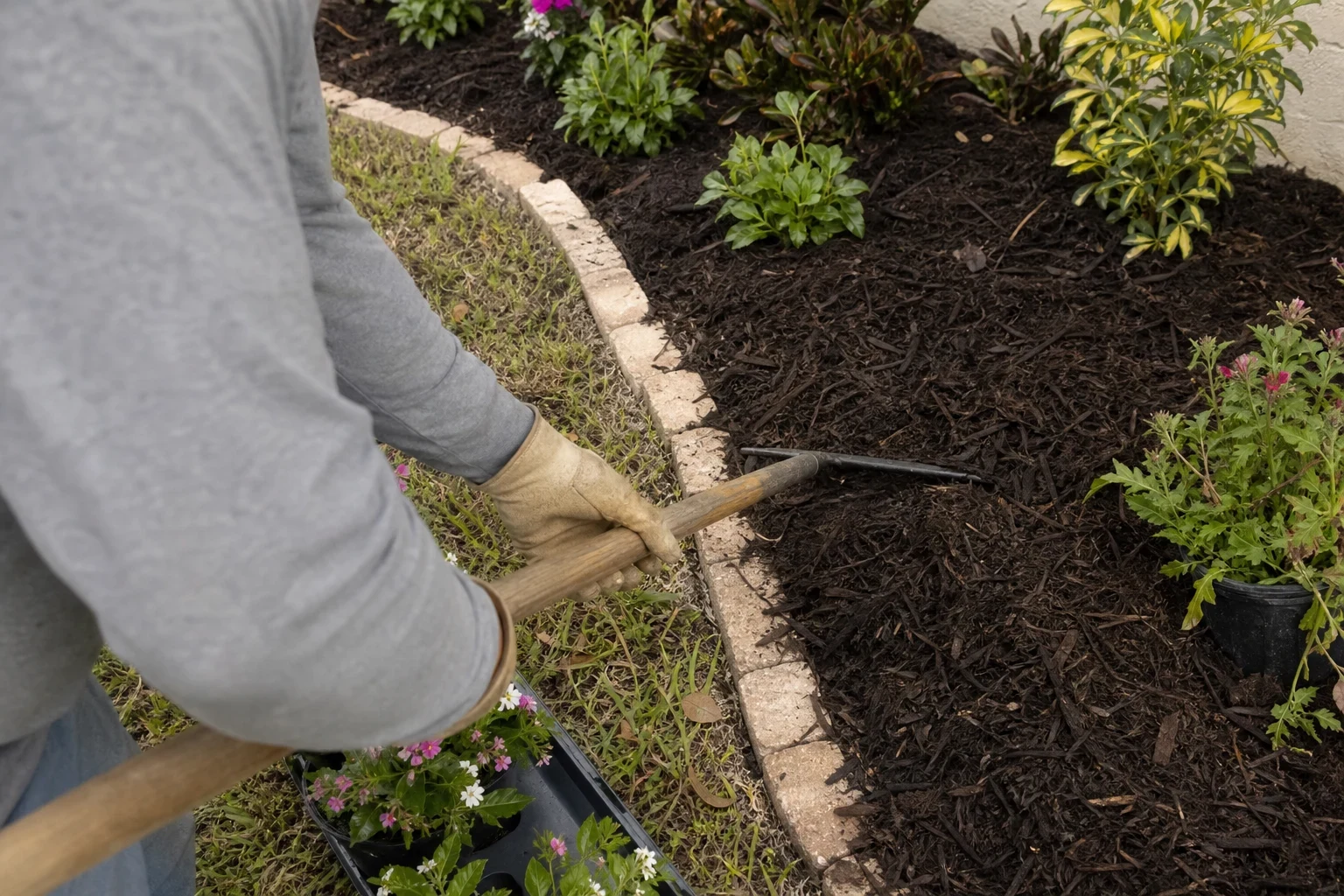
Beds that hold their shape between visits
Good mulch work is mostly preparation. Old mulch that has matted into a crust sheds water instead of letting it soak in, weeds that are only cut at the surface come back in two weeks, and a bed without a defined edge lets lawn runners creep straight into your shrubs. We deal with all of that before a single new bag is opened.
Most of our customers call us once or twice a year to refresh existing beds, or when they want a new bed shaped around a tree, walkway or the front of the house. Here, hard summer downpours wash light mulch onto sidewalks and break down organic material quickly, so we choose products and depths that stay put and still look settled months later.
Scheduling matters as much as the material. We give you a work date, a two-hour arrival window and an honest estimate of how long the crew will be on site. If rain or a delayed delivery changes the plan, you hear it from us before the morning of.
What the work includes
Hand weeding to the root
We pull weeds with roots intact, including nutsedge and creeping grasses that snap off if you just tug the tops. Where vines have wrapped shrubs, we unwind and remove them.
Spade-cut bed edges
A clean vertical edge keeps mulch in the bed and slows grass from spreading in. We recut existing lines or shape new curves you approve on site.
Old mulch assessment
Some old mulch can be loosened and topped up. Mulch that has packed hard or soured is raked out so the new layer sits on soil, not on a mat.
Fresh mulch at the right depth
We spread pine bark, pine straw or hardwood mulch to roughly two to three inches. Around trunks and stems we pull it back so bark stays dry, and we keep a clear gap along the foundation of your home.
Planting and bed shaping
When you want new shrubs, groundcover or a reshaped bed, we plant first and mulch after. Larger redesigns are handled through our landscape design service.
Cleanup before we leave
Walks, drives and patios are blown clear of mulch and soil, and we haul away pulled weeds and old material.
Signs your beds are ready for attention
- You can see bare soil
- Mulch breaks down and thins over time. Once soil shows through, weeds germinate and moisture escapes faster.
- Grass is growing into the bed
- Runners crossing the edge mean the border has worn away. Left alone, the lawn will slowly take over the bed.
- Mulch is piled against trunks
- Mounds of mulch around a tree hold moisture against the bark and invite rot. We pull it back and spread it out properly.
- Water runs off instead of soaking in
- A gray, crusted surface sheds rain and irrigation. Breaking it up or replacing it lets water reach the roots again.
- Weeds return right after you pull them
- That usually means roots or rhizomes are still in the soil, or seed is landing on thin cover.
How a mulch job runs
- 1
Walkthrough and estimate
We walk the beds with you, measure them, talk through mulch types and colors, and note any drip lines or sprinkler heads. You get a free written estimate with each part of the work listed.
- 2
A date and an arrival window
We book a work day with a two-hour arrival window and tell you how many hours the job should take. If weather or supply changes the plan, we call ahead with a new time.
- 3
Prep, edge and weed
The crew weeds, cuts edges, removes or loosens old mulch and flags irrigation so nothing is buried or damaged.
- 4
Mulch, then a final look
Mulch goes down evenly at the agreed depth, hard surfaces are cleaned, and we walk the finished beds with you or send photos if you are away.
What shapes the price
Mulch jobs are priced on the beds in front of us, which is why we measure before quoting. Your estimate shows each item separately so you can see where the cost comes from. When bed work is part of a bigger outdoor project, you can spread the cost with financing of up to $100,000, choosing a term anywhere from 2 to 12 years and paying it off early without a penalty.
- Square footage and depth
- The size of the beds and how deep the new layer needs to be decide how much material we bring.
- Condition of the beds
- Heavy weeds, vines or thick old mulch that must be removed add labor before the new layer goes down.
- Mulch type
- Pine straw, pine bark and hardwood mulch differ in cost, coverage and how long they hold color.
- Access and edging
- Beds behind fences or far from the driveway take longer to supply, and cutting new edges adds time compared with refreshing existing ones.
Mulch and bed questions
- How often should my beds be mulched?
- Most beds here need a refresh once or twice a year. Pine straw tends to need it more often than bark. We look at what is left in your beds and tell you honestly if a top-up is enough.
- Which mulch do you recommend?
- Pine bark holds well and looks natural, pine straw knits together on slopes and around palms, and hardwood mulch gives a darker, finished look. We bring samples to the walkthrough so you can compare them next to your plants.
- Will mulch near the house attract termites?
- Any moist organic material near a foundation can, which is why we keep mulch pulled back from the slab and siding. A thinner, correct layer is safer than a thick one piled against the wall.
- Do you put landscape fabric under the mulch?
- Usually not in existing planted beds. Fabric tends to trap old mulch on top, where weeds root anyway, and it makes adding plants harder. We focus on thorough weeding and the right depth instead.
- What happens if it rains on our scheduled day?
- Light rain rarely stops the work. If storms make it impractical, we call you before your arrival window, explain why and offer the next open date.
- Can you work around my sprinklers?
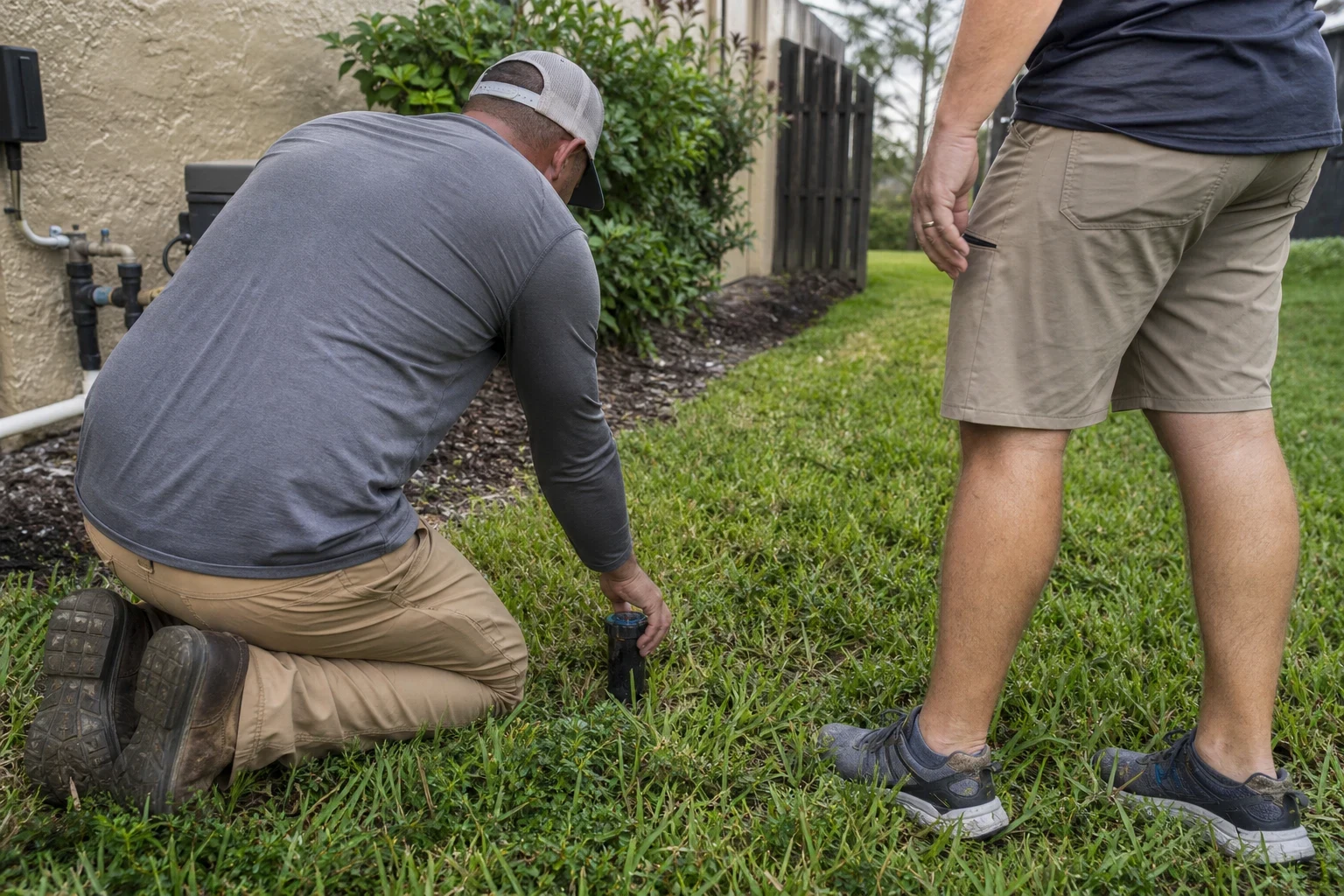
- Yes. We flag heads and drip lines before we start and keep them clear of mulch. If we notice a broken head, we point it out, and our irrigation service can repair it.
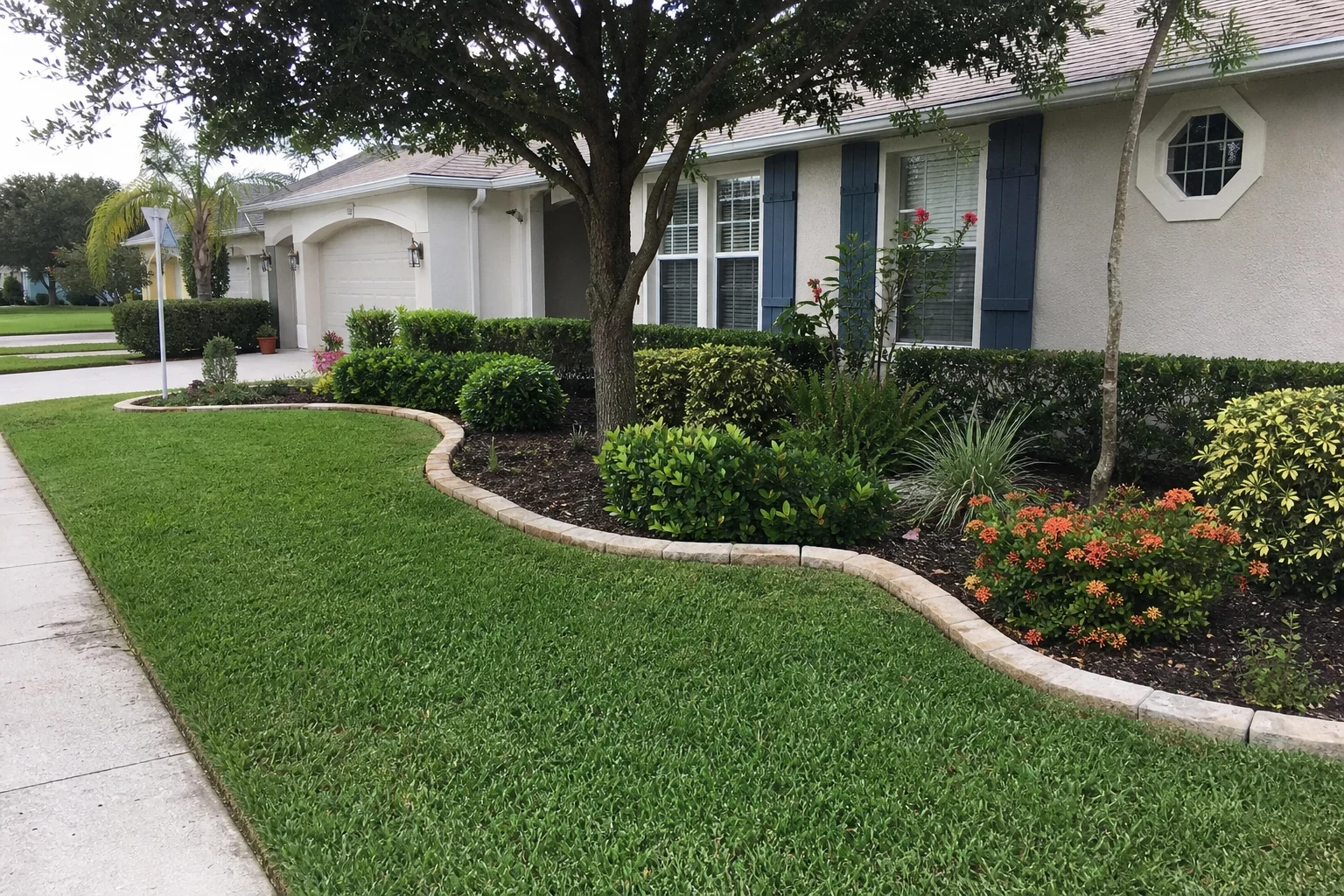
Ready for beds that look finished
Tell us about your beds and we will set up a walkthrough at a time that suits you. You will leave with a written estimate and a clear idea of when the work can happen.